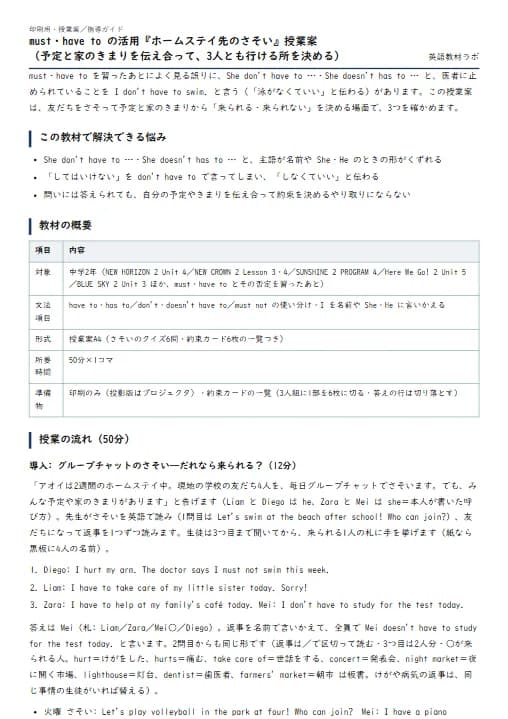
must・have to を習ったあとによく見る誤りに、She don't have to …・She doesn't has to … と、医者に止められていることを I don't have to swim. と言う(「泳がなくていい」と伝わる)があります。この授業案は、友だちをさそって予定と家のきまりから「来られる・来られない」を決める場面で、3つを確かめます。
この教材で解決できる悩み
- She don't have to …・She doesn't has to … と、主語が名前や She・He のときの形がくずれる
- 「してはいけない」を don't have to で言ってしまい、「しなくていい」と伝わる
- 問いには答えられても、自分の予定やきまりを伝え合って約束を決めるやり取りにならない
教材の概要
| 項目 | 内容 |
|---|---|
| 対象 | 中学2年(NEW HORIZON 2 Unit 4/NEW CROWN 2 Lesson 3・4/SUNSHINE 2 PROGRAM 4/Here We Go! 2 Unit 5/BLUE SKY 2 Unit 3 ほか、must・have to とその否定を習ったあと) |
| 文法項目 | have to・has to/don't・doesn't have to/must not の使い分け・I を名前や She・He に言いかえる |
| 形式 | 授業案A4(さそいのクイズ6問・約束カード6枚の一覧つき) |
| 所要時間 | 50分×1コマ |
| 準備物 | 印刷のみ(投影版はプロジェクタ)・約束カードの一覧(3人組に1部を6枚に切る・答えの行は切り落とす) |
授業の流れ(50分)
導入: グループチャットのさそい——だれなら来られる?(12分)
「アオイは2週間のホームステイ中。現地の学校の友だち4人を、毎日グループチャットでさそいます。でも、みんな予定や家のきまりがあります」と告げます(Liam と Diego は he、Zara と Mei は she=本人が書いた呼び方)。先生がさそいを英語で読み(1問目は Let's swim at the beach after school! Who can join?)、友だちになって返事を1つずつ読みます。生徒は3つ目まで聞いてから、来られる1人の札に手を挙げます(紙なら黒板に4人の名前)。
- Diego: I hurt my arm. The doctor says I must not swim this week.
- Liam: I have to take care of my little sister today. Sorry!
- Zara: I have to help at my family's café today. Mei: I don't have to study for the test today.
答えは Mei(札: Liam/Zara/Mei○/Diego)。返事を名前で言いかえて、全員で Mei doesn't have to study for the test today. と言います。2問目からも同じ形です(返事は/で区切って読む・3つ目は2人分・○が来られる人。hurt=けがをした、hurts=痛む、take care of=世話をする、concert=発表会、night market=夜に開く市場、lighthouse=灯台、dentist=歯医者、farmers' market=朝市 は板書。けがや病気の返事は、同じ事情の生徒がいれば替える)。
- 火曜 さそい: Let's play volleyball in the park at four! Who can join? Mei: I have a piano concert soon. My piano teacher says I must not play volleyball./Zara: I have to help at the café until six./Diego: I have to see the doctor again. Liam: I don't have to take care of my sister today. 札: Liam○/Diego/Mei/Zara
- 水曜 さそい: Let's go to the night market at seven! Who can join? Zara: Sorry. My family's rule: I must not go out at night./Liam: I have to take care of my little sister tonight./Mei: I have to visit my aunt tonight. Diego: I don't have to help with dinner tonight. 札: Mei/Zara/Liam/Diego○
- 木曜 さそい: Let's ride our bikes to the lighthouse after school! Who can join? Diego: My arm still hurts. I must not ride a bike this week./Liam: I have soccer practice on Thursdays. I have to go./Mei: I have to go to the dentist at four. Zara: I don't have to help at the café today. 札: Diego/Zara○/Liam/Mei
- 土曜 さそい: Let's go to the farmers' market on Saturday morning! Who can join? Zara: I have to work at the café on Saturday mornings./Liam: I have a soccer game on Saturday morning. I must not be late!/Diego: I have to see the doctor again on Saturday. Mei: I don't have to clean my room this Saturday. 札: Mei○/Liam/Diego/Zara
- 日曜 さそい: Let's go to the zoo by bus today! Who can join? Mei: It's my grandmother's birthday. I have to go to her party./Liam: I have a cold. The doctor says I must not go out today./Zara: I have to work at the café on Sundays. Diego: I don't have to see the doctor again. 札: Zara/Mei/Diego○/Liam
気づき: not がつく2つ——来られるのはどっち?(8分)
黒板に、返事を名前で言いかえた文を「来られない」と「来られる」に分けて並べます。
| 来られない | 来られる |
|---|---|
| Diego must not swim this week. | Mei doesn't have to study for the test today. |
| Zara must not go out at night. | Liam doesn't have to take care of his sister today. |
| Liam has to take care of his little sister tonight. | Zara doesn't have to help at the café today. |
「not がつく文は2種類。来られるのはどっち?」——導入のさそいでは、must not(してはいけない)は来られない、doesn't have to(しなくていい)はあいていて来られる。続けて、名前・She・He のあとは has to・doesn't have to(Zara have to ×・Mei don't have to ×)、doesn't のあとは have・must のあとは原形(doesn't has to ×・must not swims ×)、my は his・her に(my sister → his sister)。
展開: 週末の約束会議——3人とも行けるのは?(20分)
3人組で、アオイ1人と友だち2人。アオイがカードのチラシの行き先3つを読み上げ、カードは見せずに予定ときまりを伝え合って(聞く2人は Do you have to …? で確かめる)、3人ともできる1つと待ち合わせの時間を決めます。最後にアオイが2人のことを名前で言って理由をまとめます(by six=6時までに は板書)。
- アオイ: Look! We can go to the pool, the park, or a movie at six. Which one?
- Ken: Do you have to be home early on Sunday? ― アオイ: Yes, I do. I have to be home by five.
- Ken: I must not swim this week. My ear hurts. ― Yui: I don't have to go to practice on Sunday.
- アオイ: So, Ken must not swim, and I have to be home by five. Yui doesn't have to go to practice. Let's meet at the park at one!
組1が終わったら、組2のカードはアオイ役が左どなりに移るように配ります。must not のつもりの I don't have to swim. が聞こえたら、止めずに Can we go to the beach, then? と聞き返させます。
組1(2週目の土曜日。アオイ・Liam・Zara)
- アオイ: ① swimming at the beach(1〜4時・子どもだけ)② the night market(6〜9時)③ the zoo(バス・10〜3時)/I have to be home by six on Saturday. I don't have to be home for lunch.
- Liam: I don't have to take care of my sister this Saturday. My family's rule: I must not swim in the sea without an adult(大人なしで).
- Zara: I have to work at the café until 9 a.m. My family's rule: I must not go out at night.
組2(2週目の日曜日。アオイ・Mei・Diego)
- アオイ: ① a bike ride to the lake(9〜12時・大通りを通る)② a cooking class(1〜3時)③ a movie(6〜8時)/I have to be home by six on Sunday. I must not ride a bike on the main road.
- Mei: I have to play in a piano concert on Sunday morning. I don't have to practice after it.
- Diego: My arm is OK now. I don't have to see the doctor. I have to be home by five.
答え(先生用・切り落とす): 組1は③、組2は②(待ち合わせは Zara の仕事・Mei の発表会のあと)。
出口: 本物の約束——班の練習日を決める(7分)
班で、来週の音読の練習日を、学校の中の本物の予定で決めます(家や塾の予定は言わない)。1人3文で、決まった日・来られない日の理由(Sora has to go to the committee meeting(委員会)on Monday.)・来られる理由(Hina doesn't have to clean the classroom on Wednesday.)。決めた日はそのまま練習日に(姉妹校と会う日でもよい)。
まとめ(3分)
「must not はしてはいけない、doesn't have to はしなくていい。has to は時間がふさがる」で終わります。
定着・テストへの接続
定期テストでは、I have to … → Ken has to … の書きかえ、場面に合う must not・doesn't have to の選択、Can you come on Saturday? に理由をそえて答える条件英作文などで問われることがあります。
導入は『転校生は宇宙人!』、練習は『グリーン先生の質問』と定着ドリル、確認は10分小テスト、書く活用はお悩み相談、評価は電話ロールプレイテスト。Premium はおしごと面接マッチングと使い分けワークシート。
投影版パワーポイント(Premium)
導入のクイズ6問のパワーポイント(全27枚・名前の札4枚・話者ノートつき)。Premiumのファイルです。