間接疑問の最難関は「疑問文なのに語順が肯定文に戻る」こと。What is this? が Do you know what this is? になる瞬間の違和感を、文法説明で解消しようとすると泥沼になります。この授業案は、クイズ番組の司会の決まり文句として型ごと導入し、20問のクイズを浴びるうちに語順が耳に馴染んでいる状態を作ります。
この教材で解決できる悩み
- Do you know what is this? の語順誤りが最後まで残る
- 間接疑問の説明が「語順を戻す」という操作の話に終始してしまう
- 受験期の中3の授業に、演習一辺倒でない山場を作りたい
教材の概要
| 項目 | 内容 |
|---|---|
| 対象 | 中学3年(間接疑問を導入・復習する時期。ONE WORLD は2年 Lesson 8 で扱う) |
| 文法項目 | 間接疑問(know / wonder / tell me+疑問詞節) |
| 形式 | 授業案A4(クイズ20問の画像案と作り方つき) |
| 所要時間 | 50分×1コマ |
| 準備物 | クイズ用スライド(下の20問の画像案と作り方を参照) |
授業の流れ(50分)
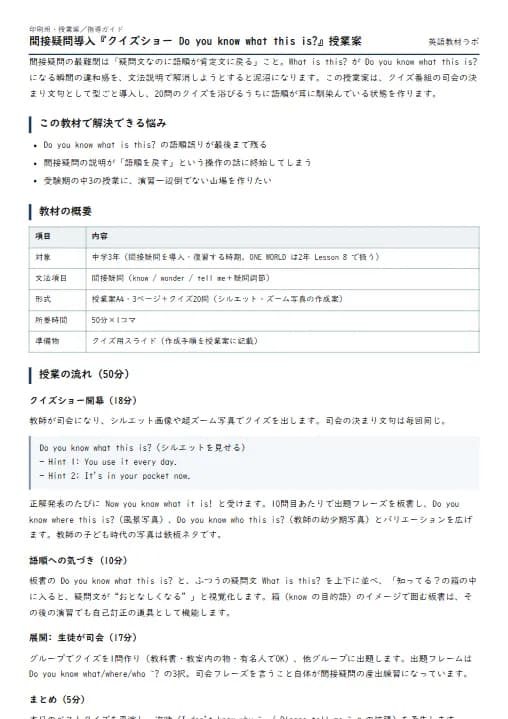
クイズショー開幕(18分)
教師が司会になり、シルエット画像や超ズーム写真でクイズを出します。司会の決まり文句は毎回同じ。
Do you know what this is?(シルエットを見せる) — Hint 1: You use it every day. — Hint 2: It's in your pocket now.
正解発表のたびに Now you know what it is! と受けます。10問目あたりで出題フレーズを板書し、Do you know where this is?(風景写真)、Do you know who this is?(教師の幼少期写真)とバリエーションを広げます。教師の子ども時代の写真は鉄板ネタです。
語順への気づき(10分)
板書の Do you know what this is? と、ふつうの疑問文 What is this? を上下に並べ、「知ってる?の箱の中に入ると、疑問文が“おとなしくなる”」と視覚化します。箱(know の目的語)のイメージで囲む板書は、その後の演習でも自己訂正の道具として機能します。
展開: 生徒が司会(17分)
グループでクイズを1問作り(教科書・教室内の物・有名人でOK)、他グループに出題します。出題フレームは Do you know what/where/who ~? の3択。司会フレーズを言うこと自体が間接疑問の産出練習になっています。
まとめ(5分)
本日のベストクイズを再演し、次時(I don't know why ~. / Please tell me ~.への拡張)を予告します。
クイズ20問の画像案と作り方
作り方(1問2〜3分): 実物をスマートフォンで撮り、PowerPoint に貼ります。シルエットは、図の「背景の削除」で背景を消してから「図の修整」で明るさを -100% にすると黒い影になります。ズームは、同じ写真をトリミングで一部だけ切り出し、ヒントのたびに範囲を広げた3枚を並べます。
1〜10 Do you know what this is?
| # | 見せ方 | 答え | ヒント1 / ヒント2 |
|---|---|---|---|
| 1 | シルエット | a smartphone | You use it every day. / It's in your pocket now. |
| 2 | シルエット | an umbrella | You use it on rainy days. / It opens and closes. |
| 3 | ズーム(表面の模様) | a soccer ball | You kick it. / It's round. |
| 4 | ズーム(目盛り) | a ruler | You use it in math class. / It's long and thin. |
| 5 | シルエット | a banana | It's yellow. / Monkeys love it. |
| 6 | ズーム(鍵盤の一部) | a piano | It makes music. / It has black and white keys. |
| 7 | シルエット | a hanger | It's in your closet. / Your clothes hang on it. |
| 8 | ズーム(網の目) | a badminton racket | You use it in P.E. / You hit a shuttlecock with it. |
| 9 | シルエット | a stapler | It's on the teacher's desk. / It puts papers together. |
| 10 | ズーム(表紙の文字) | this textbook | You have it now. / You open it in this class. |
11〜16 Do you know where this is?(校内と学校の近所を教師が撮る)
| # | 見せ方 | 答え | ヒント1 / ヒント2 |
|---|---|---|---|
| 11 | 風景(校内) | the library | It's quiet there. / You can borrow books there. |
| 12 | ズーム(校内) | the music room | There is a piano there. / You sing there. |
| 13 | 風景(校内) | the nurse's office | You go there when you are sick. / There is a bed there. |
| 14 | ズーム(床のライン) | the gym | It's very big. / You play basketball there. |
| 15 | 風景(近所) | the station near our school | You take trains there. / It's near our school. |
| 16 | 風景(近所) | the park near our school | Children play there. / You can see it from this room. |
17〜20 Do you know who this is?(写真は本人の了解を取ってから)
| # | 見せ方 | 答え | ヒント1 / ヒント2 |
|---|---|---|---|
| 17 | 子どものころの写真 | 教師自身 | This is a baby. / This baby is in this room now. |
| 18 | 子どものころの写真 | 学年のほかの先生 | This person teaches at our school. / This person likes sports. |
| 19 | ズーム(手と腕時計) | 校長先生 | This person works in our school. / This person talks at school assemblies. |
| 20 | シルエット | 教師のペット(うさぎの例) | He lives with me. / He likes carrots. |
高校入試との接続
間接疑問は多くの公立入試の並べ替え・英作文で頻出です。この授業の翌週から、帯活動のJUMBLE(整序トレーニング)に間接疑問を混ぜ始めると、導入の記憶が新しいうちに手の運動として定着します。